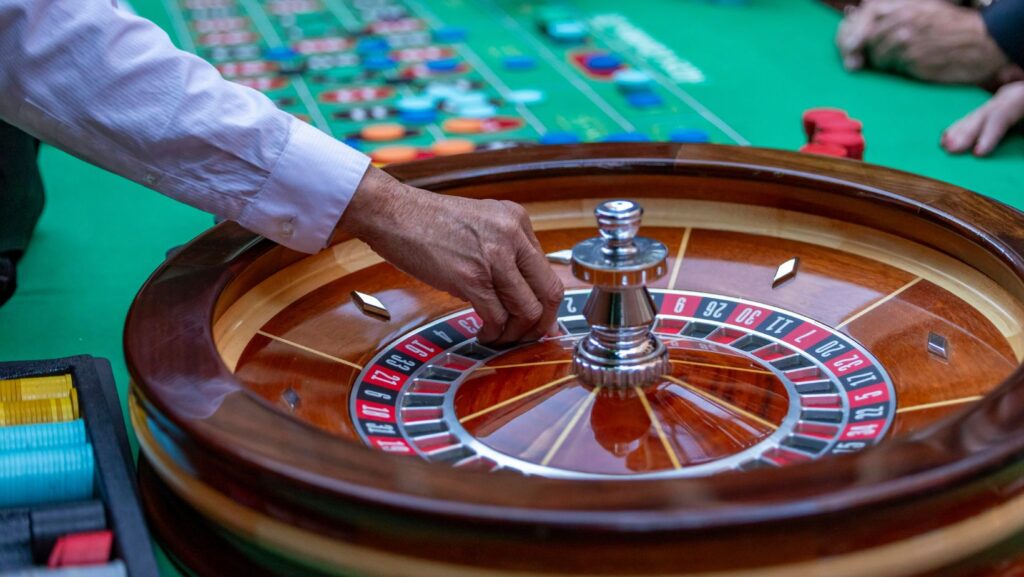
The Roulette table gets a lot more interesting once you stop staring at the table and start following the wheel. Sector bets turn the layout into a different kind of game, where position suddenly means something. The racetrack is the key to seeing what is really going on around the wheel itself.
There are two ways to look at the same numbers when it comes to Roulette. The betting table arranges them numerically in rows, while the wheel arranges those numbers in a very different order. ‘The racetrack’ is a strategy which follows that wheel order, and playing the track makes an interesting case study.
The Racetrack Follows the Wheel, Not the Felt
On a European roulette wheel, zero sits between 26 and 32. Look at the betting table and those numbers are scattered across different parts of the layout, because the table is designed around numerical rows rather than physical neighbours on the wheel. ‘The racetrack’ removes that disconnect by arranging the numbers in the same sequence as the wheel.
That becomes useful once you start looking at live roulette. At SpinBet Australia, the live casino includes European Roulette and Lightning Roulette alongside American roulette, so you can see how different wheel formats sit behind the betting interface. European roulette uses a single zero, which gives the wheel 37 pockets, while the American version adds 00 and changes the sequence completely.
The racetrack therefore gives you a map of where each number physically sits. A number that appears several rows away on the table may be directly beside another number on the wheel, which is the whole basis of neighbour bets and the larger sector bets built around them.
Instead of playing the numbers as they are on the table, play them as they are on the wheel. That way, a near miss would still pay out if you have the numbers covered in wheel order and not table order.
Sector Bets Turn Wheel Geography Into Table Bets
Sector betting becomes much easier once you stop reading the numbers as a table and start reading them as positions around a circle. The traditional European sectors divide the wheel into named areas, with each selection covering several pockets and requiring several normal table bets to reproduce manually.
| Sector Bet | Numbers Covered | Standard Units | Share of 37-Pocket Wheel |
| Voisins du Zéro | 17 | 9 | 45.95% |
| Tiers du Cylindre | 12 | 6 | 32.43% |
| Orphelins | 8 | 5 | 21.62% |
| Jeu Zéro | 7 | 4 | 18.92% |
Voisins du Zéro covers the largest section, taking in 17 of the 37 pockets around zero. Tiers du Cylindre covers the section opposite it with 12 pockets, while Orphelins picks up the eight numbers left outside those two main sectors.
Live roulette at SpinBet Australia uses multiple camera angles, including close views of the wheel, which is useful here because these bets make far more sense once you can see the circular arrangement rather than treating roulette as a flat set of numbered boxes.
Scattered Numbers Become Neighbours on the Wheel
Take a neighbour bet centred on 17. With two neighbours on either side, the five numbers are 2, 25, 17, 34 and 6. Put them on the betting table and they appear unrelated; follow the wheel and they sit beside one another in a continuous run.
Tiers du Cylindre makes the same point on a larger scale. The standard table placements are 5-8, 10-11, 13-16, 23-24, 27-30 and 33-36. Those six split bets are spread across the table, yet together they cover one continuous section of the physical wheel.
This is where the racetrack earns its place. Instead of remembering which split bets reproduce a particular part of the wheel, you can work from the wheel section itself. The layout translates that geographical choice back into ordinary roulette bets without asking you to mentally rebuild the sequence every time.
The table and racetrack are therefore answering different questions. The table tells you where a chip goes; the racetrack tells you which numbers sit together around the wheel.
Roulette Starts With Physics, Then Comes the Maths
Physicist J. Doyne Farmer described roulette in a 2024 University of Chicago interview as “just a rolling ball on a circular track with a rotor in the middle”. That plain description is useful because the racetrack begins with the physical wheel, then the probabilities follow from the number of pockets it contains.
A European wheel has 37 pockets, so any single number represents 1/37 of the wheel, or about 2.70%. Voisins covers 17/37, which is 45.95%; Tiers covers 12/37, or 32.43%. Orphelins covers 8/37, equal to 21.62%, while Jeu Zéro takes 7/37, or 18.92%.
Those figures are specifically European-wheel maths. SpinBet carries single-zero European roulette as well as American roulette, so the distinction is important when you are reading sector coverage rather than simply looking at the table.
Covering a larger section gives you more pockets in the selection, but it does not alter what any individual pocket represents on the wheel. The racetrack reorganises the numbers; the underlying probability still comes from the wheel itself.
Previous Spins Can Create Patterns Without Changing the Wheel
A racetrack also makes clusters easy to spot. Three results landing near each other around the wheel stand out visually because the numbers are shown in physical order, even though each new spin still begins with the same set of possible outcomes.
A 2006 field study by James Sundali of the University of Nevada, Reno and Rachel Croson of the University of Pennsylvania examined 139 roulette players across 904 spins and 18 hours of casino play. Their results found that previous outcomes influenced betting choices, with players responding both to runs they expected to continue and to results they thought were due to change.
Australian researchers Anastasia Ejova, Paul Delfabbro and Daniel Navarro approached the same broad question from another direction in 2015. Their 100-item survey of 329 participants found that beliefs about luck and personal control can influence the way people interpret random gambling outcomes.
Neither study examined racetrack betting itself. The useful point is narrower: people notice patterns in random sequences, and the racetrack makes spatial patterns especially easy to see. A cluster around one part of the wheel remains a record of previous spins, not a change in the next spin’s basic probabilities.
The Racetrack Is a Shortcut, Not a Forecast
The racetrack is most useful as an organising tool. It lets you:
- see which numbers sit beside one another on the physical wheel
- place recognised sector bets without rebuilding each table bet manually
- read wheel-based bets in a layout designed around wheel position
- keep complicated sector selections easier to follow on smaller screens
That last point becomes especially practical online. SpinBet’s live casino runs across desktop, tablet and smartphone, so a racetrack can condense a complicated set of table placements into one wheel-based selection without asking you to work through several small betting areas individually.
The distinction remains simple once you see it. The normal table organises roulette for placing chips; the racetrack organises the same game around the wheel itself. Sector bets follow that circular order because they are defined by physical neighbours, and the percentages come directly from how much of the 37-pocket European wheel each section covers.
Gambling is for entertainment and carries financial risk. It is intended for adults only, and you should only gamble with money you can afford to lose.